Resources

Reports

Our Alliance members consistently produce globally leading, cutting-edge research, modeling, and analysis that shape ambitious, cost-effective clean energy policies in the world’s largest and fastest-growing economies. The research below represents only a fraction of the Alliance’s total output. Visit each Alliance member’s website to view the complete body of work for each organization.

Fugitive and Unburned Methane Emissions from Ships (FUMES) project

New research from the International Council on Clean Transportation, using groundbreaking methods, finds methane emissions from ships powered by liquified natural gas are much higher than believed, pointing to the need for much tougher regulations to safeguard the climate and protect coastal communities from dangerous air pollution.

The case for compact cities electrified in India

Reducing greenhouse gas emissions from transport is crucial to meet India’s climate action commitments and limit global warming to 1.5°C. A new report by ITDP and the University of California, Davis, “Compact Cities Electrified: India,” finds developing compact and dense cities that shift most trips to walking, cycling, and public transport while simultaneously pursuing rapid electrification of all vehicles is the solution.

EU policies for climate neutrality in the decisive decade: 20 Initiatives to advance solidarity, competitiveness and sovereignty

This discussion paper pulls together expertise from across the Agora Think Tanks. As a starting point for a dialogue, Agora makes recommendations for 20 policy initiatives across all sectors to advance EU policies for climate neutrality in this decisive decade.

Comparison of the life-cycle greenhouse gas emissions of combustion engine and electric passenger cars in Brazil

ICCT's life-cycle assessment of the greenhouse gas emissions from passenger cars in Brazil finds current electric vehicles emit about one third of the life-cycle emissions of gasoline-ethanol internal combustion vehicles and that future models can approach zero emissions.

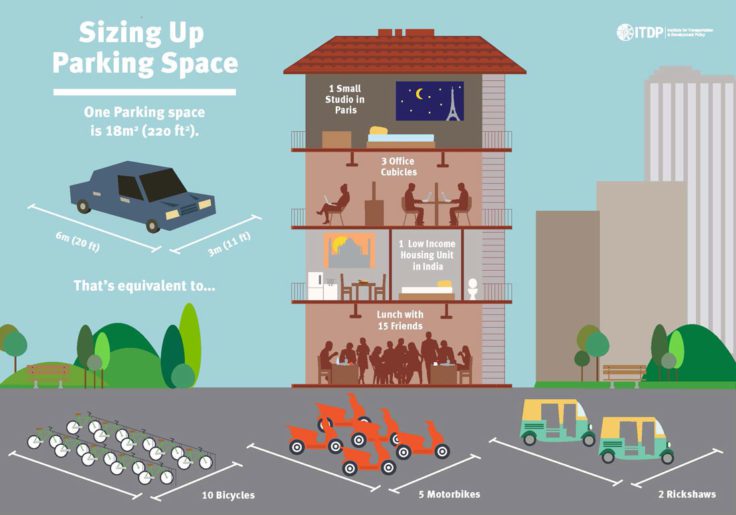
Breaking the code: Off-street parking reform lessons learned

Building on ITDP’s global expertise on parking policies, this report spotlights off-street parking as a costly and often overlooked area of urban planning that can impact vehicle use, how street space is prioritized, and even housing availability.
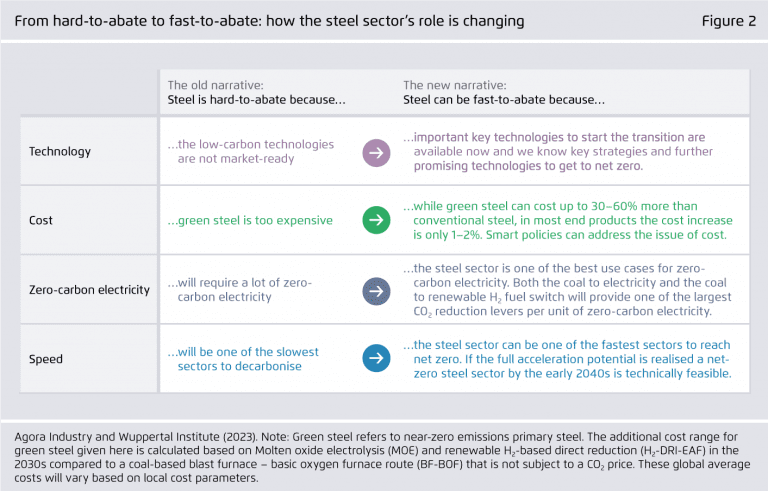
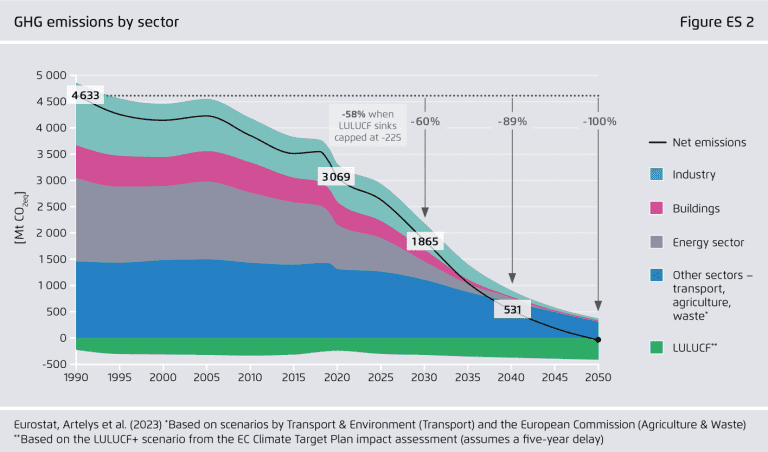
15 Insights on the global steel transformation

A new study from Agora Industry and the Wuppertal Institute finds it is technically feasible for the global steel sector to reach net-zero greenhouse gas emissions by the early 2040s.

Breaking free from fossil gas

The escalation of Russia’s war against Ukraine and the resulting fossil gas crisis put a spotlight on Europe’s high dependency on imports of cheap Russian pipeline gas. Against this background, this report from Agora Energiewende presents a structural transition pathway away from fossil gas use by 2050 based on detailed sectoral modeling of the energy, buildings, and industry sectors.

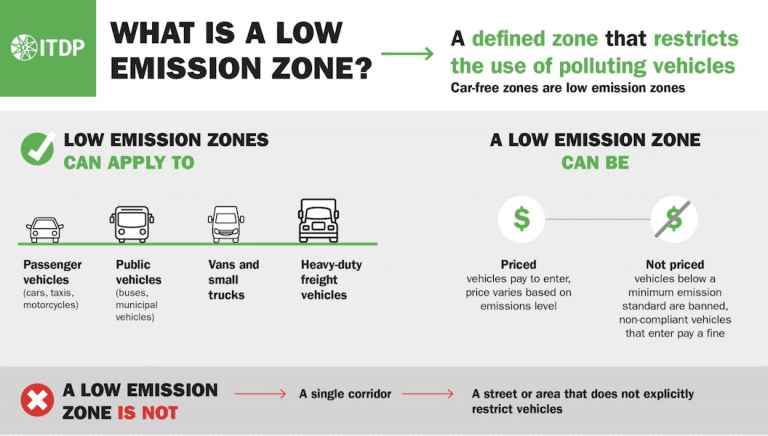
The opportunity of low emission zones: A taming traffic deep dive report

Low emission zones (LEZs) are a potentially impactful strategy for cities to reduce dependence on motor vehicles and offer clean, affordable, accessible alternatives. The Opportunity of Low Emission Zones report offers a closer look at LEZ strategies to provide context for decision-makers and planners interested in understanding the potential of these policies for their own cities.

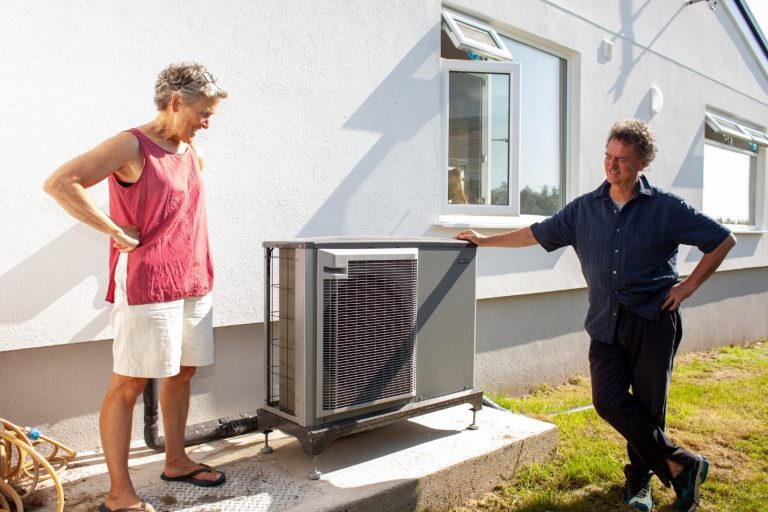
A policy toolkit for global mass heat pump deployment

Heat pumps, a critical technology for clean energy systems, are poised to become the most important technology for heating decarbonization. Currently, the vast majority of heat is provided by fossil fuels.

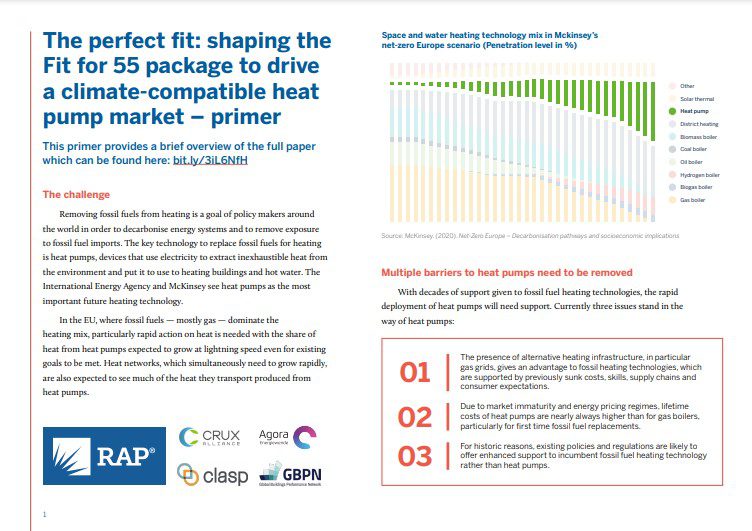
The perfect fit: Shaping the Fit for 55 package to drive a climate-compatible heat pump market

In order to decarbonize energy systems and eliminate exposure to fossil fuel imports, policy makers around the world have looked towards removing fossil fuels from heating as a worthy goal. Heat pumps remain the key technology to do just that.

The Compact City Scenario – Electrified

For the urban transportation sector—one slice of the climate-change equation—the road to keeping below 1.5°C global warming involves both compact cities developed for walking, cycling and public transit, as well as a rapid and strategic transition to electrified vehicles.

A policy strategy for decarbonizing the building sector

India’s urban population grew from 290 million in 2001 to 378 million in 2011 and is projected to reach 590 million by 2030.

Categories

Newsletter Signup

Stay up to date with all the latest Crux Alliance news.

We use cookies to provide social media features, analyze our traffic, assist you with contacting us, and help improve your user experience on our website. By clicking “OK” you consent to the use of these types of cookies. However, some system cookies that are needed for this website to work properly have already been set. Learn more in our Privacy Policy.