

China introduces world’s first solar efficiency standard
In June, China issued the world’s first mandatory energy efficiency standard for solar panels and inverters, which will take effect in January 2027. Because higher-efficiency panels and inverters convert more sunlight into usable power, they displace more electricity that would otherwise come from the grid, which still relies partly on fossil fuels. This new standard is expected to prevent 306 million tons of CO₂ emissions by 2040.
CLASP provided technical assistance and international policy experience to support the standard’s development. As a first-of-its-kind standard, it could serve as a model for other countries to implement their own solar performance standards.

Building the evidence base to decarbonize South Africa’s buildings
South Africa is one of the world’s top-20 sources of building-related GHG emissions. With a housing deficit of 2.2 million units, the building stock is positioned for massive expansion. Without intervention, the sector’s emissions could double by 2050, jeopardizing the nation’s climate targets and placing immense strain on a challenged grid. Policy reforms are urgently needed to set the country on a path to net-zero emissions by 2050.
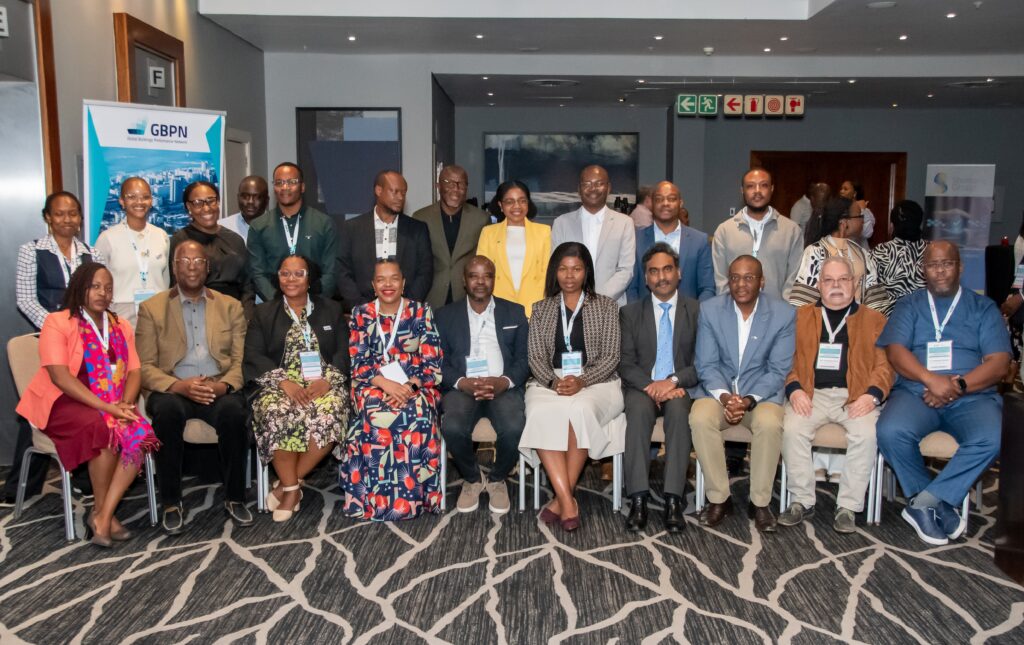
Responding to a direct request, GBPN has partnered with the South African National Energy Development Institute (SANEDI) to deliver the country’s first national baseline of building energy use and emissions, bringing its experience developing building-sector decarbonization roadmaps in Indonesia and Kenya.
The baseline will draw on surveys, site audits, and utility data across at least three regions, reflecting different building types, settings, and climate zones. The resulting dataset will track progress and give SANEDI and partners the evidence needed to inform policy and investment.

Agora analysis shows how Europe’s industrial transition can shield the sector from price shocks
Europe’s steel, cement, and chemicals industries currently rely on fossil fuels for 75 percent of their energy and feedstocks, exposing them to volatile markets. New Agora Industry analysis shows how strategically combining homegrown renewable electricity, green hydrogen, and sustainable biomass would strengthen Europe’s industrial resilience. This transition would cost less than 1 percent of European industrial gross value-added per year, while preventing over €17 billion in extra costs (compared to a fossil-dominant scenario) in the event of a year-long fossil fuel price shock like the Strait of Hormuz closure.
In addition, this approach could avoid an extra 1.4 billion tonnes of CO2 emissions relative to the fossil-dominant scenario. By pairing sustainable biomass with carbon capture and storage, these industries could even remove more CO2 than they emit as early as the mid-2040s. Published just as the EU negotiates carbon market reforms, the analysis provides timely evidence for maintaining robust carbon pricing as the main driver of a more resilient, competitive, and climate-neutral European industry.

Agora analysis spotlights priorities for China’s energy and industrial transition
Agora’s annual review of China’s energy transition presents a data-driven assessment of China’s energy and climate trajectory based on 10 key trends from the 14th Five-Year Plan period (2021–2025). Conducted by Agora Energy China in collaboration with Agora Energiewende, the analysis finds emissions are beginning to plateau. Yet heavy industry now accounts for around 14 percent of total emissions, making industrial decarbonization the next critical frontier.
Launched ahead of China’s 15th Five-Year Plan for energy development, the review highlights practical priorities for the next five years: electrifying industry, scaling green hydrogen, and making the power system more flexible to integrate record renewable growth. It also draws lessons for other economies from China’s experience with clean-tech manufacturing, grids, and storage, underscoring opportunities for international cooperation on industry, standards, and supply chains.
The analysis gives an international audience a clear picture of how China’s transition is shaping global policy discussions and what it means for global climate action, energy security, and economic competitiveness. Broad international media coverage, including by Bloomberg, will help ensure that lessons from China’s experience inform policy and investment decisions beyond China.

NEXT group spotlights clean energy and grid investment as key priorities of Korea’s AI agenda
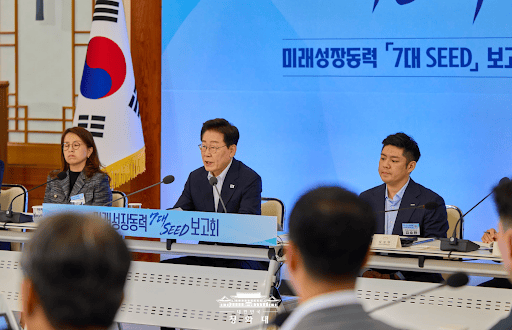
On August 12, South Korean think tank NEXT group CEO Professor Seungwan Kim briefed President Lee Jae Myung on the critical role of renewable energy and grid investment in supporting Korea’s AI ambitions. The briefing brought this evidence directly to Korea’s highest level of decision-making, helping connect the country’s AI strategy with its clean energy and climate commitments.
The Honam region in the country’s southwest, where 6.3 GW of new semiconductor manufacturing capacity is planned, is emerging as an important test case. Semiconductor facilities require large amounts of reliable electricity, and a stronger grid would let them draw on the region’s abundant clean energy. With sufficient grid investment, South Korea could avoid the need for around 3.5 GW of new gas-fired power generation near these facilities by 2031, preventing around 7 million tonnes of CO₂ emissions annually.
At a critical moment in Korea’s AI and industrial planning, NEXT group—a member of the International Network of Energy Transition Think Tanks—helped make the case for aligning power system infrastructure investment with both economic growth and climate goals.

Brazil’s Ministry of Cities launches ITDP guidelines for standardizing e-bus adoption nationally
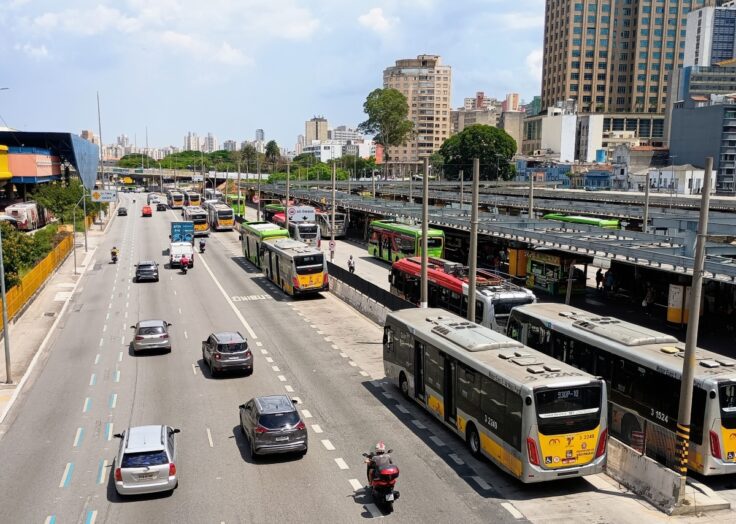
Brazil’s Ministry of Cities, in partnership with ITDP Brazil and the German Development Bank, has released the results of a comprehensive study to establish technical standards for guiding the procurement of electric bus fleets nationwide. ITDP’s findings offer a thorough diagnosis of the current e-bus landscape and map the risks, challenges, and opportunities for standardizing Brazil’s approach to large-scale e-bus procurement. The findings also offer insights into implementing these strategies locally with rigorous technical and operational guidelines for both bus fleets and charging infrastructure.
These guidelines are especially critical for aligning the efforts of large cities, following recent ITDP research showing that more than 14,000 diesel buses in 21 major metro regions are primed for electrification. Such a transition could reduce bus emissions by nearly 25 percent through 2030 across these metro areas. As the Brazilian government and development partners look to ramp up investments in electric mobility, these guidelines mark a major technical step forward.

Chinese ministries jointly issue plan to scale up electric heavy-duty trucks nationwide, targeting 1.6 million e-trucks on the road by 2030
Diesel heavy-duty trucks contribute substantially to nitrogen oxide and particulate matter emissions from China’s road transport. Informed by ICCT’s technical analysis, 11 Chinese government ministries, led by the Ministry of Transport (MoT), jointly issued a national plan in June 2026 to scale up electric heavy-duty trucks nationwide, targeting 40 percent market penetration and 1.6 million electric trucks on the road by 2030.
ICCT shared international charging infrastructure models from the EU and California with the Transport Planning and Research Institute of the MoT, the lead drafter of this plan, shaping China’s first-ever dedicated charging target for heavy trucks: 3,000 new charging stations by 2030. ICCT also co-developed the Freight Flow Analysis Tool with the China Academy of Transport Science and Tsinghua University to provide commodity-level insights on freight flows and structure, which informed the 14 highway corridors selected for zero-emission freight development.
ICCT will continue working with partners to inform the plan’s implementation.

Crux Alliance will once again be at Climate Week NYC, bringing together the people shaping clean energy policy in the world’s highest-emitting countries. Join us to see what’s possible when technical expertise across grids, buildings, transport, and industry works in coordination rather than in silos—the model our work is built on. Whether you’re funding this work or leading it, our events are a chance to connect with the network doing it and to leave with a clearer picture of where collective action can move policy fastest.