Crux Alliance premieres short film spotlighting GBPN’s affordable housing work in India
Between 2022 and 2024, GBPN and its partners conducted field research and community consultations in the Indian state of Gujarat to understand how affordable housing design affects residents’ health, with special attention to women’s experiences. Through direct community engagement, they documented how poorly designed homes put residents’ health at risk during periods of extreme heat.
The resulting Design Guidelines for Healthy and Climate-Resilient Affordable Housing have since been piloted in new affordable homes built by a private developer in Ahmedabad, Gujarat, and GBPN’s recommendations now appear in the draft revision of India’s National Building Code.
As GBPN continues its work to help policymakers implement these guidelines, this short film tells the story of how healthier homes can transform daily life for millions of families and prevent a surge in emissions from one of the world’s fastest-growing building sectors.
This is what the Crux Alliance looks like in action. Every day, Alliance members are informing policies that not only cut planet-heating emissions, but also support healthier, more resilient societies.
Watch the short film, and then share it on social media.

More than 600 people joined Crux Alliance across our seven events at Climate Week NYC. Over two days, we discussed how smart policy can cut emissions while improving health and lowering costs, why super pollutants like black carbon deserve a bigger role in climate and transport policy, and how to turn technical research into messages that move decision-makers. We examined the limits of coal as a response to energy security concerns, what it will take to build modern, flexible grids, and how to design clean energy policy so its benefits reach all people.
Thank you to the speakers, moderators, and audiences who made these conversations so substantive, and to our partners and Alliance members for co-hosting.
If you couldn’t join us in person, all event recordings are now available.

New report: Combining electrification + mode shift could reduce fuel consumption from urban passenger transport by 70 percent
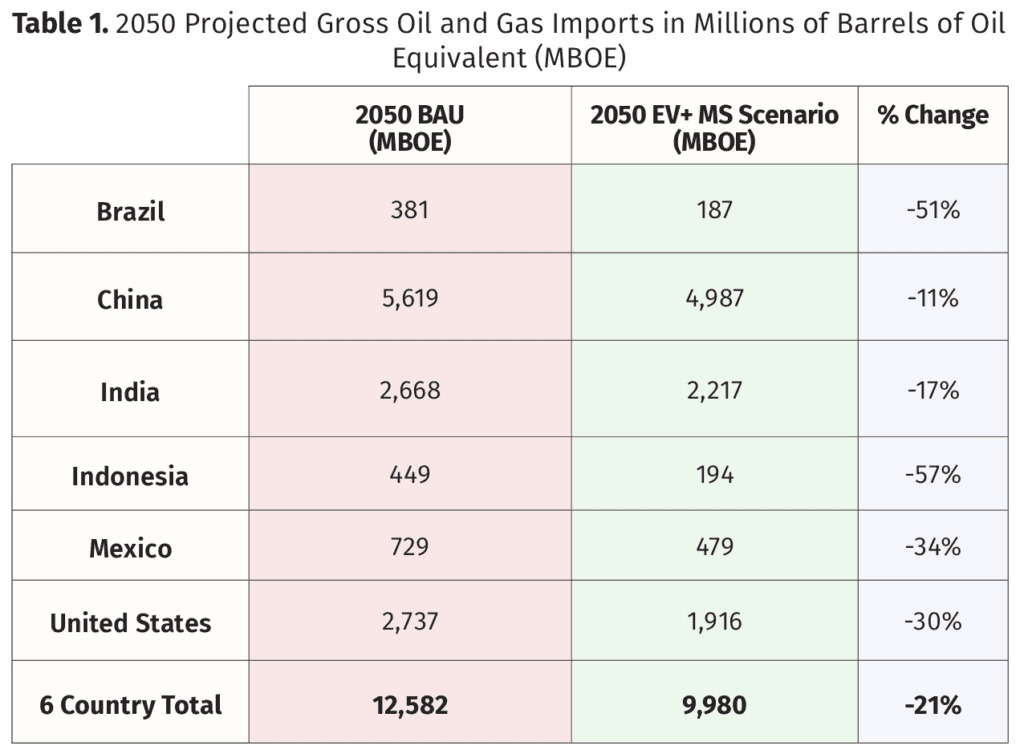
Faced with fuel shortages and economic disruption, countries need to pursue structural changes to reduce their dependence on imported fossil fuels. To guide government decision-making, ITDP and the University of California, Davis recently investigated how electrified public transport combined with compact cities designed for walking and biking would impact liquid fuel demand in Brazil, China, India, Indonesia, Mexico, and the U.S.—countries that together represent nearly half the world’s population. The findings, published in “Compact Cities Electrified: Energy Outlook,” show that an electrification and mode shift scenario would reduce liquid fuel demand by 85 percent across these countries by 2050. The country-level analysis finds that a combined approach could reduce gross oil and gas imports by 11 percent to 57 percent, depending on the country. This first-of-its-kind study shows how building cities around efficient electric mobility, public transport, walking, and cycling gives governments greater control over their energy future.

Agora analysis shows how EU rules can unlock low-carbon steel investment
Europe’s steelmakers are investing in cleaner production, and stronger demand signals can help unlock the next wave of low-carbon investment. A new policy brief by Agora Industry and Agora Energiewende quantified how the EU Industrial Accelerator Act (IAA) could create demand for around 9 Mt of low-carbon steel by 2030, giving green steel producers and investors greater certainty.
The analysis identified how the European Commission’s proposed IAA could maximize the investment signal, setting out specific recommendations including a mechanism to increase the 25 percent minimum low-carbon steel requirement as the market develops, stronger targets for 2035, and closer alignment with other EU policies. These measures could help create the predictable demand needed to drive more investment in low-carbon steel projects.
Published as the European Parliament and EU governments prepare their respective positions on the IAA, the analysis helped put the scale of potential demand and the conditions needed to unlock investment in low-carbon steel at the center of the policy discussion.

Agora Energiewende brings global grid stability experience to decision-makers shaping future power systems
As grid systems move from relying mainly on large spinning generators, such as conventional power plants, to a more diverse mix of wind, solar, batteries, and other inverter-based technologies, new approaches are emerging to provide the stability needed for reliable electricity systems. Agora Energiewende’s global showcase, developed with the Energy Systems Integration Group, curates over 30 projects across 12 countries, illustrating how different technologies and enabling frameworks are already supporting grid stability.
The showcase captures the decisions behind each project—including the system context, options considered, costs, timelines, and lessons learned—giving key stakeholders practical evidence to inform system planning, investment, and the rules needed to support new stability solutions. Presented at the Global System Operations Summit in Berlin in September, the showcase generated strong interest among grid operators, utilities, technology providers, and policymakers. It was also shared at the Renewable Energy Grid Integration Week in Porto, Portugal, reaching hundreds more decision-makers, researchers, engineers, and other industry experts.

Decarbonizing industrial heating: Evaluating low-carbon alternatives for industrial thermal systems
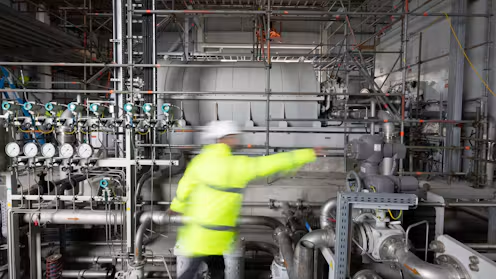
GreenCape, a member of the International Network of Energy Transition Think Tanks, has published an industry brief guiding South African businesses through the technical, financial, and regulatory pathways to decarbonize industrial process heat and steam generation.
As policy frameworks tighten, carbon border adjustments increase, and global supply chain pressures increase, relying on coal and heavy fuel oil poses growing financial and compliance risks. This brief evaluates technical feasibility, levelized cost of heat, carbon liability, and operational suitability to help operators future-proof their facilities.
Key insights:
- Low-carbon alternatives can offer lower operating costs than heavy fuel oil systems.
- Transitions typically require hybrid technology integration rather than direct equipment replacement.
- Heat-as-a-service models significantly lower adoption barriers.
Targeted at sustainability managers, ESG professionals, operations directors, and plant engineers, the guide delivers actionable insights for industrial heating transitions.

Informed by ICCT research, New Zealand retains Clean Vehicle Standard
Established in 2023, New Zealand’s Clean Vehicle Standard regulates vehicle imports to reduce CO2 emissions to specific targets. Concerned about how the standard was affecting importers and vehicle costs, the Ministry for Cities, Environment, Regions & Transport (MCERT) launched a review earlier this year. One outcome of the review could have been the standard’s elimination.
During Stage 1 of the review, MCERT requested analysis from ICCT. The ICCT found that the standard had driven substantial CO2 reductions, consumer fuel-cost savings, and electric vehicle uptake, and that removing it would adversely affect decarbonization goals, consumers, and industry. Informed by ICCT analysis, on August 21, 2026, MCERT announced that it would retain the standard, which Transport Minister Chris Bishop called “the most cost-effective way to increase the availability of lower-emissions vehicles in New Zealand.” MCERT noted that ICCT’s research “helped inform the Cabinet’s decisions.”
Stage 2 of the review, which will examine whether and by how much to reduce the standard’s targets, begins in October. MCERT has invited ICCT to provide analysis throughout the process. ICCT will offer input on maintaining realistic targets while defending against significant weakening.

Electrifying India’s commercial kitchens
Nearly 90 percent of India’s commercial kitchens rely on liquid petroleum gas. This reliance has recently exposed the sector to supply chain disruptions and price volatility, making it difficult for many restaurants to continue running.
Electric cooking offers a long-term, cost-effective solution that helps commercial kitchens mitigate these risks, while strengthening India’s energy security and reducing harmful emissions.
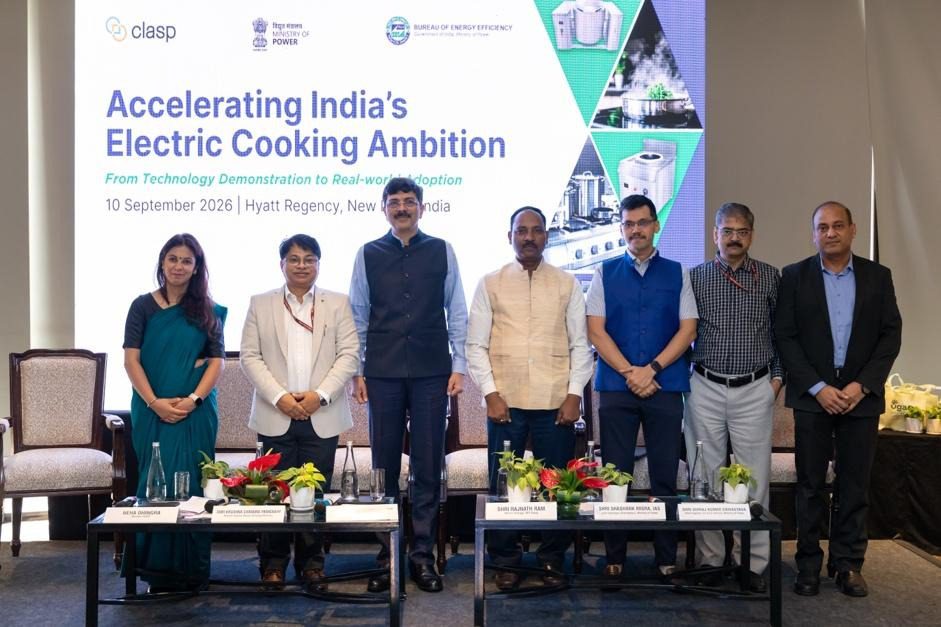
CLASP and India’s Bureau of Energy Efficiency (BEE) recently brought together over 120 chefs, hoteliers, manufacturers, and policymakers in New Delhi for a demonstration of commercial electric cooking, sharing insights on what the switch to e-cooking actually looks like. Faster cooking, more precise temperature control, greater heat safety, and lower maintenance were some of the benefits discussed.
This effort supported CLASP and BEE’s broader goal of building the confidence, knowledge, and market ecosystem that commercial kitchens need to switch to electric cooking and fully harness its benefits for people and the planet.

Utilities are becoming partners in decarbonizing Asia’s buildings
Across Indonesia, India, and China, utilities are increasingly playing an important role in buildings decarbonization, including by transforming their own building portfolios, managing demand, integrating renewable energy, and using digital technologies to make buildings more responsive to the grid. GBPN is helping accelerate learning in these areas by bringing utilities together to share practical experiences.
A peer exchange with utility leaders from the three countries highlighted approaches that could inform wider adoption, from PLN’s (Indonesia) pilots combining rooftop solar, smart air-conditioning, and energy management across its buildings, to demand response and battery storage in India, and digital technologies and virtual power plants in China. Exchanges like this help utilities learn from one another and shorten their learning curves as they respond to rising electricity demand, the energy crisis, and the need to integrate more renewable energy.

In Ethiopia, ITDP Africa convenes decision-makers to advance electric mobility plans
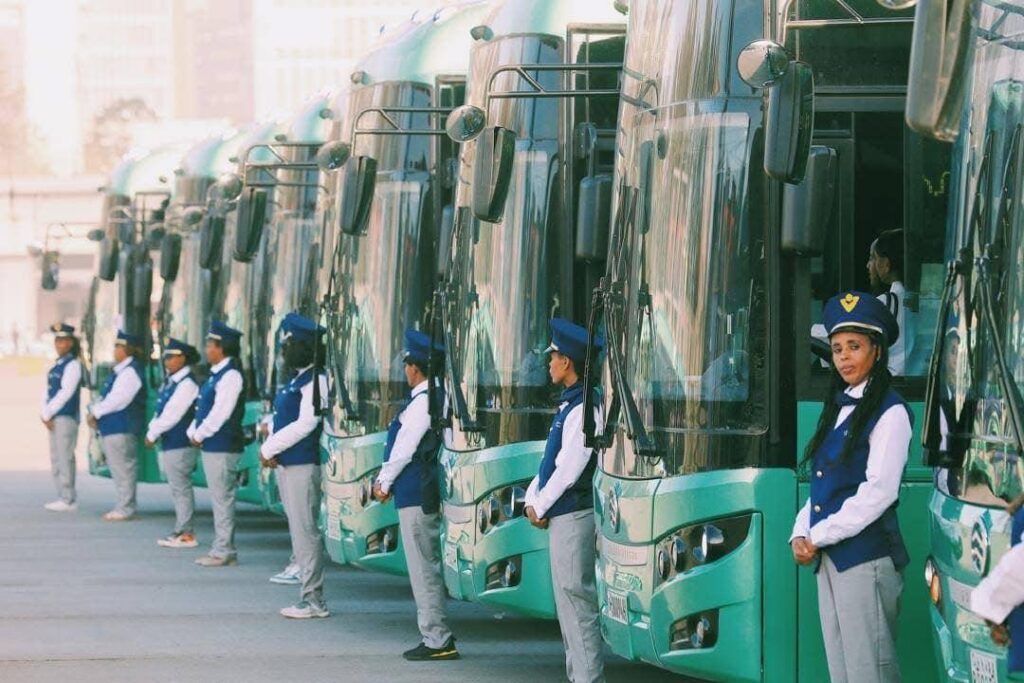
As Ethiopia moves ahead in its transition to electric transport, policymakers are working to ensure charging infrastructure keeps pace with the planned expansion of the national electric bus fleet. In September, ITDP Africa and partners convened a high-level roundtable, where government agencies, utilities, investors, and transport operators discussed the policy and regulatory reforms needed to support a national target of 4,850 electric buses and 2,300 charging stations by 2030. Participants highlighted expanded charging infrastructure as critical to achieving the country’s emissions reduction goals, while also identifying key barriers to success, including complex permitting processes, unclear institutional responsibilities, limited data, and lagging coordination.
The discussion generated key priority actions, including streamlining approvals, strengthening interagency collaboration, improving data sharing, and expanding public-private partnership models. The discussion further emphasized improvements to procurement and tax policies that can better support the expansion of the domestic charging market. As the country prepares to host COP32, these high-level policy convenings lay the foundation for ensuring Ethiopia can deliver on its climate ambitions.