Forum Energii, Poland’s leading clean energy think tank, recently celebrated its tenth anniversary. To mark the occasion, Crux Alliance Communications Director Sarah Spengeman interviewed Forum’s Founder and President, Joanna Pandera. Having authored and co-authored more than 150 publications, Pandera is a recognized voice in European energy and climate regulation, energy markets, renewable energy, and the challenges of energy system transformation.
Sarah Spengeman (SS): Congratulations on Forum Energii’s 10th anniversary! Can you tell us the story of how Forum Energii was founded? What challenges did Forum face at the outset?
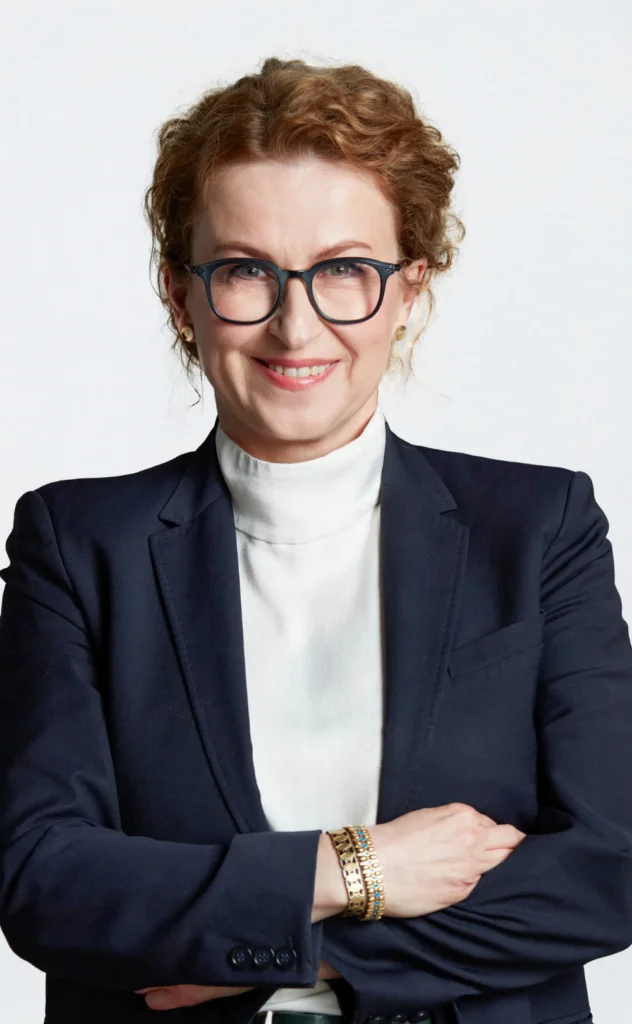
Joanna Pandera (JP): I am so glad we’re talking, Sarah. Crux Alliance is an incredibly important partner for us.
We were created out of a sense of frustration, but also a deep belief that change is possible. Where did that conviction come from? For years, I had worked at the Ministry of the Environment, first as Chief of Cabinet to the Minister, and later as Deputy Minister. We made the tough decisions and shaped both regulations and subsidy schemes. I saw firsthand how public moods, the media, and industry pressure actually drive policy.
The especially intense learning curve came with the UN Climate Change summit (COP14) hosted by Poland in Poznań in 2008. It was an accelerated training in how global climate policy is made—I witnessed all of the friction and clashes of interests.
During Poland’s presidency of the EU Council in 2011, when I wrapped up negotiations on key EU legal acts, I saw the EU dynamic, including different EU member states’ drivers and narratives. In Poland back then, it struck me just how much public debate lacked a professional, substantive voice supporting climate action and transition. On one side, you had the coal ethos and the heavy interests of the traditional energy sector tied up with politicians; on the other, a handful of radical environmentalists who couldn’t convince the mainstream.
I noticed a massive gap. The progressive ministers I worked with often lacked external support and solid data to build real scenarios for change and help them make tough calls. Twenty years ago, Poland was fresh out of its EU accession, far less affluent, and deeply conservative. When I decided to found Forum Energii, there were plenty of doubts—friends warned me that a think tank like this couldn’t survive in Poland, and that we would get crushed.
I was stubborn. I wanted to do what I believed made sense. I had strong backing from major organizations—the European Climate Foundation, Agora, and Crux Alliance. I had seen how similar organizations operated in the U.K., Germany, and France. Once we launched, it turned out that no one crushed us at all and that we successfully filled that gap.
Recently, during our 10th anniversary, key decision-makers told us that today, it’s hard to imagine Poland’s energy transition without Forum Energii. That made us feel deeply proud.
SS: Poland’s energy landscape has undergone tremendous change over the past 10 years. From your perspective, what have been the most pivotal moments?
JP: The shift is massive, and we feel a part of it. Ten years ago, Poland’s energy mix was 83 percent coal, with zero appetite for change despite global advancements such as the Paris Agreement. Today, coal is down to 52 percent, and renewables are at 32 percent. Over the past few years, we have changed more than we did over the course of several decades. We are all part of this change.
Along the way, there were a few turning points that we smartly capitalized on because, as Churchill used to say, never let a good crisis go to waste.
The first crisis hit a bit more than decade ago. Back then, renewables were seen as a threat to the established energy system. Meanwhile, climate change and a surge in air conditioning sent summer electricity demand sky-high, which traditional coal plants simply couldn’t handle. In 2015, this culminated in massive, forced power supply restrictions for businesses. That’s when Forum Energii stepped in with the message that solar power would actually boost summer energy security. Following our analysis, the transmission system operator invited us in for hours of talks, admitting we were right. Conservative government politicians picked up on that argument, and a year later, support schemes for PV were launched. The result? From zero to 27 GW of capacity in 10 years. The second win from this crisis was the implementation of demand-side response—a mechanism that manages reductions in electricity consumption by industry, which we actively helped to design. From that moment on, experts and decision-makers started listening to us.
Another unforgettable milestone was publishing our analysis on phasing out coal in Poland and the broader European region, prepared jointly with partners from Germany and the Czech Republic. At the time, saying “coal is over” in Poland was considered high treason, so we were naturally anxious. For months prior to publication, we had consulted with politicians and experts about our findings, carefully explaining our intentions and building trust in our findings. Three months after the release, Poland’s largest energy company announced it was planning to shed its coal assets. People inside the company later told me how crucial it was that someone else said it first, and that we gave them the safe opening to act further.
There are many more examples like this. Our motto is “analysis and dialogue.” We don’t just talk to the converted to give them more arguments; we primarily talk to the unconverted. Our operation model is transparent: we don’t do commercial consulting; you cannot buy us. We work exclusively with reputable funders, engaging with business strictly on a non-profit basis. We hear that this is unique, and this is why we put a particular emphasis on building trust. We also tackle the social dimension of the transition: household costs, air quality, and the realities of coal-mining regions.
Of course, not everyone loves us, but overall, we feel immense support and a deep sense of purpose in what we do.
SS: Looking back, what are the most important ways Forum Energii has contributed to Poland’s energy policy?
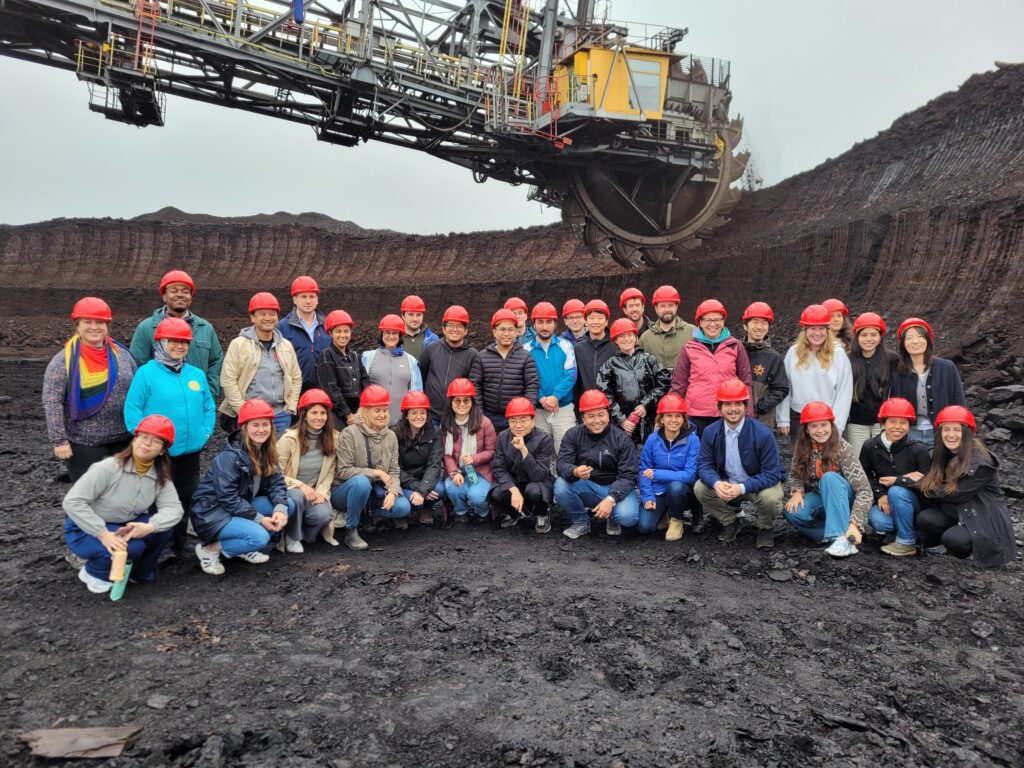
JP: In Poland itself, the way people think about renewables has completely changed, and I think we have contributed to this. A decade ago, they were viewed as an expensive threat; today, they are the pillar of our security and national resilience. We launched the conversation about replacing coal with zero-emission sources and at the same time we strongly supported coal regions so people would not be left behind. Among other things, we managed to persuade the European Commission to provide Just Transition Fund support to the Bełchatów region, home to Europe’s largest lignite power plant mine. All that while bearing in mind that back in the 1990s, Poland had plenty of painful experiences with economic transformation, and it still resonates strongly among people who are just afraid of change.
We also work consistently on security of supply in the fast-changing power system by boosting system flexibility via demand-side response, dynamic tariffs, and energy storage. This year, our focus is on integrating district heating into the balancing of the National Power System, and after long conversations, the PSE (the transmission system operator) made this a priority in its new strategy. We took part in working groups shaping the National Energy and Climate Plan by 2030/2040, which maps out the rapid growth of renewables and nuclear power. We never lose sight of the social aspect: we fight for clean air, help cities roll out climate neutrality plans, and have spent years backing the electrification of heating and getting rid of dirty coal stoves.
We also played a tangible role in the heat pump boom during the 2022 energy crisis triggered by Russia’s full-scale invasion of Ukraine. My own heat pump even ended up in The Washington Post. It was unintended, and I still laugh about that today!
Our impact doesn’t stop at Poland’s borders. We actively support EU regional cooperation, and I also serve as a Special Non-Institutional Advisor to the European Commissioner for Energy, Dan Jørgensen. In Brussels, our voice helped to secure the adoption of REPowerEU, which will ban all EU imports of Russian fossil fuels by 2027. We helped to shape the new energy security strategy and are also pushing hard on grid expansion issues within the European Grids Package.
In these heavily polarized times, we manage to create a safe space for dialogue among very different stakeholders. Often, we don’t stand on the front lines ourselves; we prefer supporting leaders and decision-makers, connecting the dots, and talking to anyone genuinely interested in the future of energy.
SS: What have been some of the most challenging moments, and what have you learned that is informing your work going forward?
JP: It hasn’t all been smooth sailing. The first major hurdle was a direct, targeted attack by radical right-wing politicians, followed by a wave of hate-filled internet bots and trolls. It was highly stressful but also offered a valuable lesson. We deployed a crisis plan and brought in legal counsel to show us the right tools. Interestingly, that political attack boosted our visibility and earned us deeper respect among other key players.
A few years ago, we also brushed against a potential budgeting crisis. We grew rapidly, but our funding sources weren’t diversified enough. With Crux’s support, I flew to the U.S. to meet with funders. It turned out to be an incredible master class in fundraising.
An ongoing challenge that we constantly must adapt to is the shifting media ecosystem: pervasive polarization, disinformation, and the heavy sway of social media on key policy decisions. We can no longer rely solely on spending months on complex reports; we need the resources to react on the fly and build direct relationships. In the age of AI, human-to-human direct connections will matter most, supported by our smart presence in the internet space and platforms.
The pace and pressure can sometimes be overwhelming. But that’s because we are genuinely passionate about what we do. We know we make a real impact and we know we’re needed, and when you feel that it’s hard to just stop.
To mark our 10th anniversary, we refreshed our strategy, packing those changes into a concise document that serves as a communication basis with key decision-makers and funders. Then, in June, we managed to step away from our desks to organize a major conference and a gathering of friends, the Forum Energii, bringing together over 250 top figures from the worlds of energy, climate, and politics. That gave us the fuel we needed to recharge our batteries for the years ahead.
SS: Amid volatile geopolitics and shifting European politics, how can Poland play a leadership role on the global stage?
JP: Poland has changed dramatically. The pandemic was a global shock, but the 2022 full-scale war in Ukraine right on our eastern border keeps us in a state of permanent mobilization. In my view, Poles aren’t traditionally great at long-term planning, but when a crisis and pressure hit, we know how to act fast. That’s why we’ve been coping quite well lately.
Over a decade ago, Poland was right at the top of the world coal-dependency league. Today, renewables are the most popular energy source, viewed as a safeguard against an aggressive Russia, though crises like the one in the Strait of Hormuz remind us that challenges keep popping up. Solar panels are installed on the roofs of over half of all single-family homes. On top of that, despite gloomy moods across the rest of Europe, Poland’s economy is developing very well. What is a challenge is just to keep the speed of renewable energy deployment, security of supply, and costs under control. For example, heavy industry—which plays an important role in Poland—pays the highest electricity prices in Europe. There are plenty of challenges ahead of us.
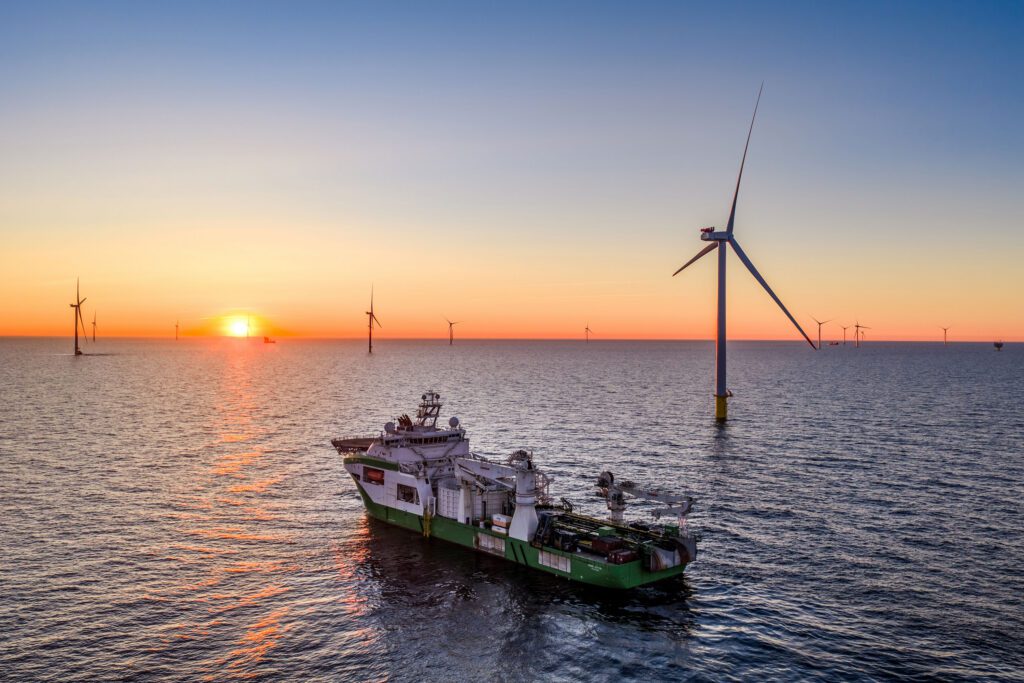
All in all, for years Poland was not the usual suspect when it came to a successful energy transition but now that changes are visible, we are expanding Forum Energii’s work through our international program and close collaboration with the INETTT network. This is for two reasons. First, because a polarized world needs more cooperation. Second, because the Polish case is fascinating: not everything goes perfectly, we’re not great at marketing our successes abroad, and we sometimes operate in a bit of chaos, but we have enormous ambition and drive.
The coming year will be crucial—we have national parliamentary elections in the fall of 2027. Unfortunately, we already see the rise of the radical right and active Russian trolls. Climate policy is bound to become one of the top three most polarizing election campaign issues.
But we have a concrete action plan and are preparing for it.
SS: Thank you Joanna! I’m looking forward to ten more years of progress!